Solving the Microsleep Problem: High-Fidelity Synthetic Data for Driver Monitoring Systems (DMS)
How synthetic datasets with perfect ground truth are accelerating the development of Euro NCAP and GSR compliant in-cabin monitoring AI.
The "Ground Truth" Bottleneck in Automotive AI
The push for safer roads has made driver monitoring a legal requirement in Europe. The EU's General Safety Regulation (EU) 2019/2144 requires a driver drowsiness and attention warning in new cars, vans, trucks and buses (all new registrations since July 2024), and an advanced driver distraction warning follows on the same path, while Euro NCAP rewards driver monitoring in its safety ratings.
For AI engineers in the automotive sector, the challenge isn't building the model; it's finding the data to train it.
Collecting real-world data for DMS is fraught with issues:
Safety & Ethics
You cannot ask test drivers to fall asleep at the wheel or heavily distract themselves on public roads to capture edge cases.
Annotation Noise
A human labeler looking at a blurry IR image is only guessing if an eye is closed or just blinking. This "label noise" makes it nearly impossible to achieve the high accuracy required for safety certifications.
Lack of Diversity
Real datasets often struggle to capture rare scenarios, specifically dangerous microsleeps or complex occlusions like sunglasses at night.
If your training data has imperfect labels, your model will never reach peak performance.
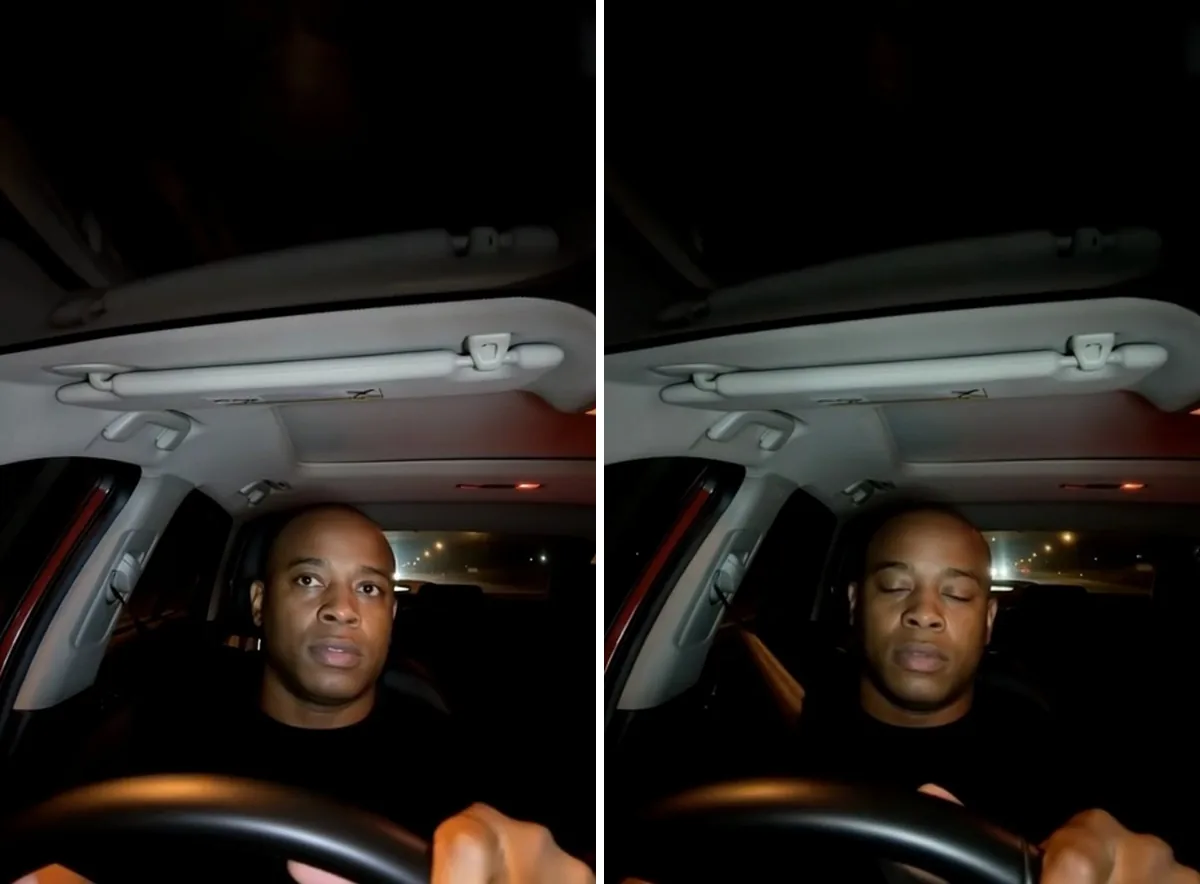
The Simuletic Approach: Exact Labels for Eye-State Detection
At Simuletic, we eliminate the guesswork. By generating physics-based synthetic data, we create scenarios that are impossible or dangerous to capture in the real world.
Because every pixel is computer-generated, the ground truth isn't a guess: the renderer knows where every eye landmark is and how far each eye is closed.
The Synthetic Driver Drowsiness Detection Dataset is designed to help teams validate and train robust DMS models: eye keypoints plus three eye-state classes (eye_open, eye_closed, eye_drowsy), across varied drivers, glasses and sunglasses, day, night, tunnel transitions and headlight glare.

Key Dataset Features for R&D Teams
This dataset is engineered to address the specific metrics required by automotive safety standards.
1. Precise PERCLOS Scoring for Drowsiness
The industry standard for detecting drowsiness is PERCLOS (Percentage of Eyelid Closure). Calculating this accurately requires exact measurements of the Eye Aspect Ratio (EAR).
Every image carries eye keypoints, so EAR can be computed exactly from the labels, and an eye-state class (open, drowsy, closed). That is the signal you need to separate a normal blink from a drowsy droop and a microsleep.
2. Robust 3D Head Pose Estimation
Distraction is often measured by head orientation. Traditional datasets struggle with camera lens distortion in tight cabin spaces.
Because the driver is rendered from a 3D model, pitch, yaw and roll are known exactly. The catalogue dataset ships eye keypoints and eye states; head-pose labels are available in custom packs.
3. Automated Gaze Zone Classification
Knowing where the driver is looking is crucial for distraction detection. Gaze-zone labels are not part of the catalogue dataset, but they can be rendered in a custom pack, covering whether the driver is looking at:
- The Road ahead
- Side or Rear-view mirrors
- The Instrument Cluster
- The Center Infotainment screen
- Their Lap (often indicating phone use)
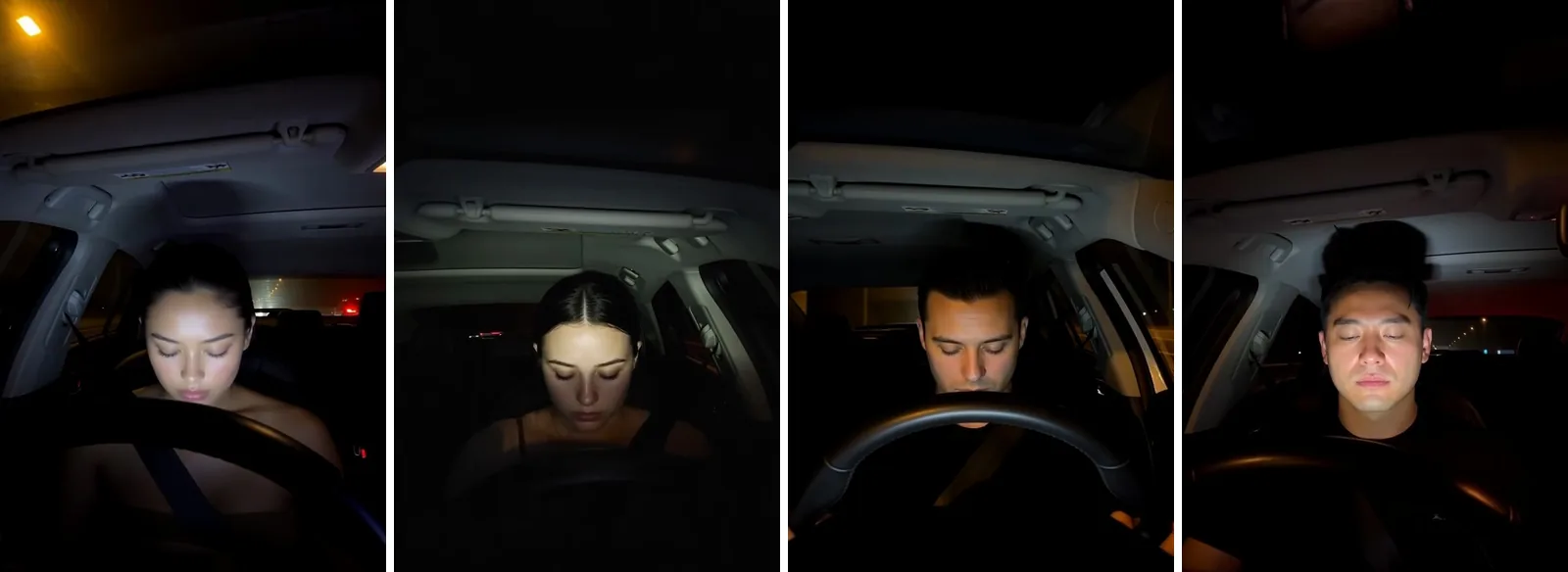
Accelerate Your Euro NCAP Compliance
This dataset is designed to shorten the development cycle for next-generation in-cabin monitoring. It does not by itself certify a system: regulatory and Euro NCAP tests are run on the finished vehicle.
Validate Existing Pipelines
Use exactly labelled data as a benchmark to test the accuracy of your current models.
Target Edge Cases
Train your models specifically on rare events like microsleeps without risking safety.
Ensure Regulatory Readiness
Build confidence that your system can meet rigorous GSR and Euro NCAP testing protocols.
Get Started with Simuletic Data
Don't let data availability slow down your DMS development. Start working with clean, perfectly annotated synthetic data today.
Download Free Validation Sample
Test our data quality with the free 168-image sample (CC BY 4.0 on Hugging Face).
Download on KaggleFull Dataset
Licences cover 1,000 images (research or commercial). The full package has 10,000 images and 20 validation videos; larger sets and custom cabins are on request.
See licencesReady to transform your DMS development?
Whether you're validating existing models or building next-generation systems, synthetic data gives you exact ground truth for the eye-state and distraction cases you can't safely film.
Related Articles
PPE compliance detection: why hard-hat presence labels aren't enough
Labelling hard hats and safety vests as worn, worn wrong or missing, from CCTV angles.
Synthetic Fall Detection Dataset: Training AI Without Staging Accidents
Open-source synthetic dataset for fall and lying down detection in CCTV environments.
AI-Generated Video for Construction Scenarios
Simulating realistic construction site scenarios for safety AI.